
What is an Integrated Health Approach Through the Eyes of a Kinesiologist?
When a person walks into our practice, we try not to see only the symptom that brought them there, but them as a whole. As dedicated kinesiologists, complaints such as persistent musculoskeletal pain, fatigue, fat gain, or a decline in physical confidence are rarely something we want to view in isolation. Grounded in human movement science, we understand that the human body is an interconnected system in which tissues communicate with physiological processes, and express in either pain, fatigue, feeling unwell, or persistent habits that are hard to break. The traditional biomedical model often attributes pain solely to tissue damage or disrupted homeostasis, but pain perception is also heavily influenced by social and psychological factors. When one part of this system is affected, it can influence another. That’s why looking for a root cause in the chain of events can solve multiple problems at once.
This is the foundation of how we approach an individual from a kinesiology perspective. Before considering which exercises might be appropriate, we first want to understand the person sitting in front of us and the context of their health concerns to ensure we deliver high quality training and coaching.
A thorough assessment therefore begins with an in-depth conversation and health history. We want to understand the person’s previous illnesses and injuries, musculoskeletal history, movement patterns, exercise history, lifestyle, immune health, nutritional habits, metabolic health, and relevant family or genetic predispositions. Depending on the individual’s age and circumstances, we may also ask about menstrual-cycle health, hormonal changes, and symptoms that can occur during periods of hormonal transition such as perimenopause. These questions are not intended to diagnose conditions outside our scope of practice. Rather, they help us identify relevant factors that may need to be considered when developing an appropriate movement and exercise strategy, or when determining whether referral to another healthcare professional is warranted.
Lifestyle and environmental factors can also be important pieces of the picture. Sleep, stress, occupational demands, nutrition, toxin exposure, and other aspects of someone’s environment can all influence how a person feels and functions. Understanding these factors allows us to look beyond the immediate complaint and consider what may be contributing to the person’s current situation.
Autonomy and Self-Efficacy
Next is understanding the person’s relationship with their own health and their autonomy. We want to know how aware they are of their habits, how they understand their symptoms, such as pain, what they have already tried, and how equipped they are to make changes. This is particularly important because an effective health intervention has to be realistic. Assessing and enhancing exercise self-efficacy in the clinical setting is crucial for long-term behavioral change. A theoretically perfect programme is of little value if it does not fit the person’s availability, capacity, motivation, or current circumstances.
Our Philosophy: Testing, Mobility, and Muscle Synergies
Our philosophy is built upon the principles of human movement science, which dictates that accurate assessment drives effective intervention. We assess issues thoroughly through objective testing. This can involve working with a professional for blood testing to gain insights into underlying metabolic or physiological barriers. Physically, we assess mobility and strength by looking at range of motion and overall muscle capacity.
However, we go further by also analyzing the muscle synergies being used. Muscle synergies represent motor modules recruited by the nervous system to flexibly perform necessary biomechanical subtasks. By evaluating these synergies, we gain a clearer picture of motor control and movement quality, rather than just isolated muscle strength.
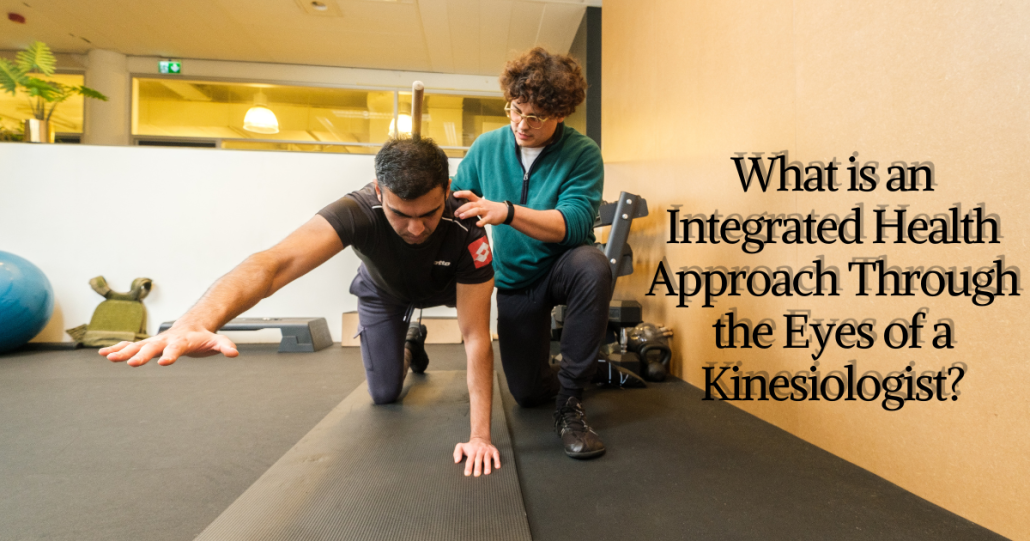
Once we have established this broader context, we move into the physical assessment. We observe how the person carries and moves their body, paying attention to posture, movement quality, mobility, balance, coordination, and strength. Depending on the individual, we may also consider body composition and other visible characteristics as part of the overall assessment. These observations are not intended to label the body. They are pieces of information that help us understand how the person currently moves and functions.
Pain Context and Fear-Avoidance
When pain is involved, the assessment becomes even more contextual. We want to know whether the individual has already seen a physiotherapist, physician, or another healthcare professional, and what they already understand about their condition. We want to establish whether they are experiencing an acute flare-up, dealing with a persistent issue, or returning to movement following an injury. This distinction matters because the appropriate exercise strategy can look very different depending on the stage and nature of the problem.
We also pay attention to how a person responds to movement. Do they move confidently, or are they apprehensive? Do they avoid certain positions because they are afraid of pain? While protective behaviors prevent further injury during an acute trauma, persistent avoidance behavior without active tissue damage can contribute to ongoing disability. Do they push through discomfort without recognising their body’s signals? Have they lost confidence following an injury or a prolonged period of inactivity? These behavioural factors can be highly relevant when developing a sustainable exercise approach. Physical capacity is only one part of the equation; a person’s confidence and relationship with movement can strongly influence how they engage with rehabilitation, training, and long-term health behaviours.
For example, someone experiencing an acute episode of pain may need a very different approach from someone who has been living with a persistent condition for several years. In some situations, the priority may be to modify movement and reduce aggravating factors while the person receives appropriate clinical care. In others, the focus may be on gradually rebuilding strength, mobility, tolerance, and confidence around movement. The objective is not to force the body through pain, but to understand the person’s current capacity and progressively work from there. Incorporating cognitive-behavioral strategies and patient education into the process can help build this confidence and boost adherence to the rehabilitation program.
Multidisciplinary Collaboration
This is also where we believe it is important to recognise the limits of the kinesiologist’s role. An integrated approach does not mean attempting to diagnose or treat every aspect of someone’s health. It means understanding how different aspects of health can interact while working within a defined professional scope. When a situation requires medical investigation, physiotherapy, nutritional intervention, or another specialised form of care, collaboration and referral are essential components of good practice.
In this sense, integration is not about one practitioner doing everything. It is about different areas of expertise working together around the needs of the individual.
Programming and Persistence
Ultimately, our role is to take all of these pieces of information and translate them into a concrete plan to address these deficiencies and movement dysfunctions through high quality training and coaching. The goal is to understand why those exercises are appropriate for that particular person, at that particular stage, and how they can be integrated into their life in a realistic and sustainable way.
Sometimes the priority is rebuilding strength. Sometimes it is improving mobility, coordination, or endurance. Sometimes it is helping someone regain confidence in their body after injury. Sometimes it is modifying an existing training programme so that a person can continue exercising while managing a musculoskeletal pain. And sometimes the most appropriate first step is recognising that further assessment from another healthcare professional is needed before exercise becomes the focus.
This is what an integrated health approach backed by human movement science looks like to us in practice. It is not about searching for one single cause or assuming that every symptom is connected to something else. It is about taking the time to understand the individual, considering the multiple factors that may influence their health and physical function, recognising the relationship between those factors, and using movement strategically and appropriately. With persistence, it leads to success.