Understanding and Managing Perimenopause
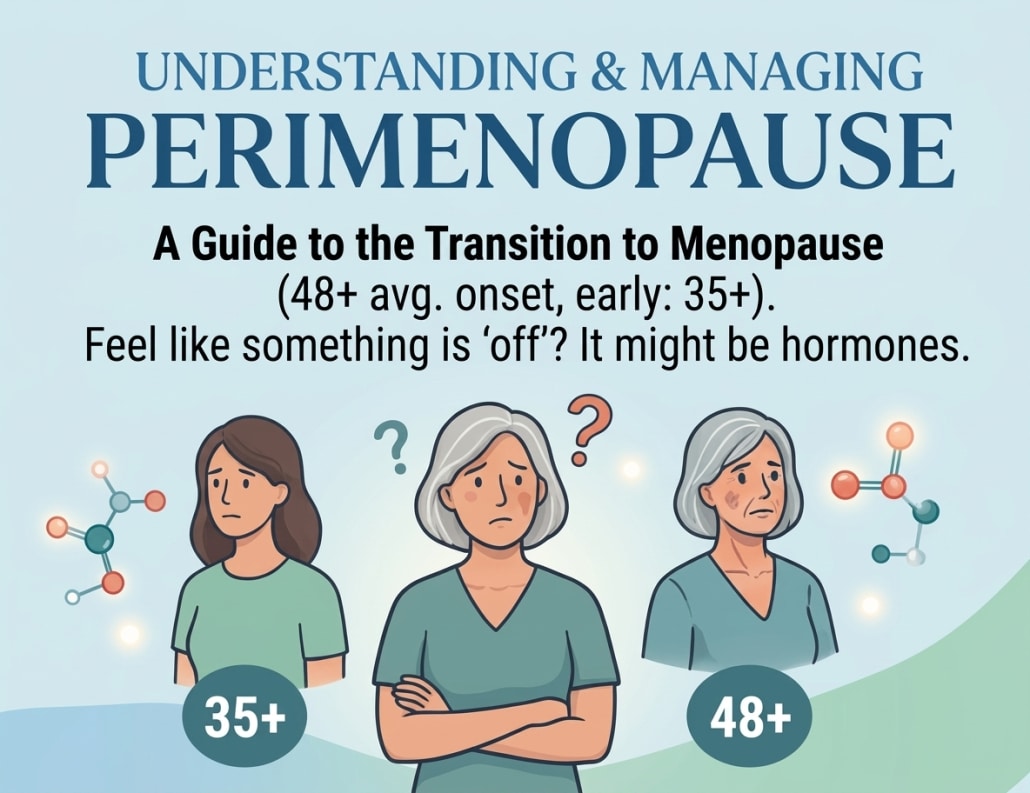
Perimenopause can begin earlier than most people would imagine. The typical onset is in the late 40s but it can begin as early as 35. However, many women do not experience symptoms to a significant extent that would impact their well-being until age 48 or later.
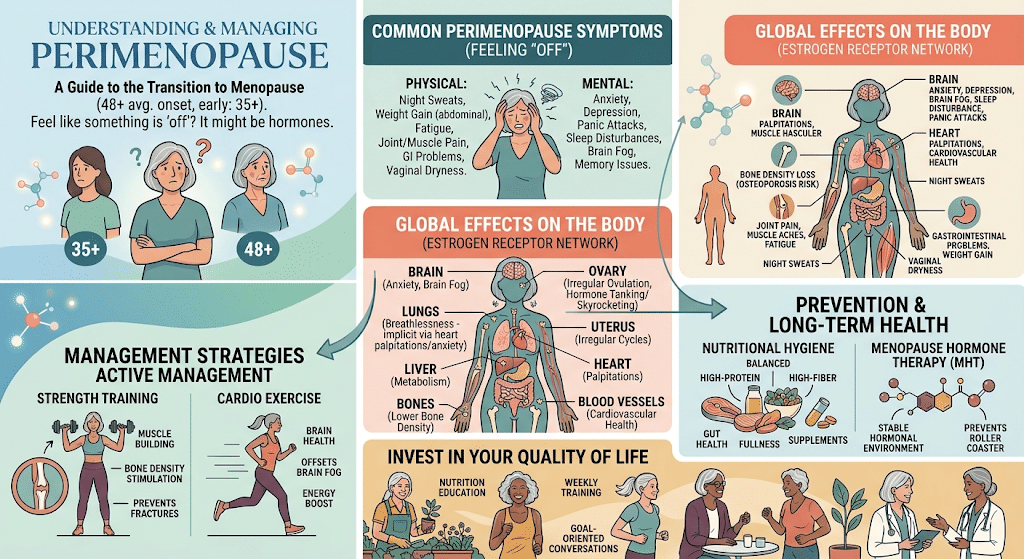
Women usually describe perimenopause as something feeling “off.” They cannot really put it into words, but some of the most common symptoms include night sweats, weight gain and fat redistribution, especially to the abdominal area, a higher frequency of anxiety, episodes of depression and panic attacks, sleep disturbances, fatigue, joint pain and muscle aches, gastrointestinal problems, vaginal dryness, and even heart palpitations. At the same time, bone density loss is most prominent during this period, which puts women at a higher risk of developing osteoporosis. There is a genetic component to how predisposed women are to these potential health risks, and every woman will experience perimenopause differently.
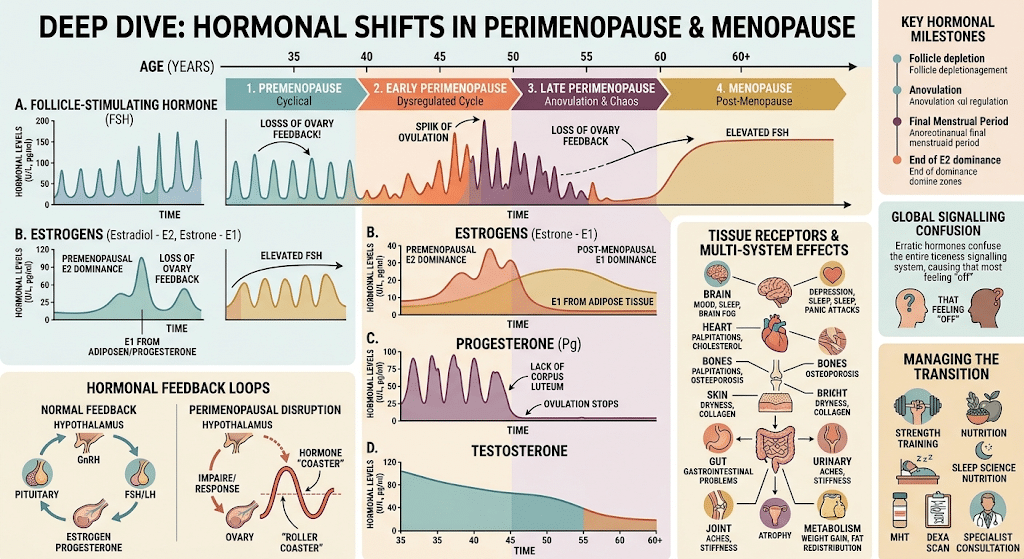
When your ovaries begin to run out of their follicle reserve, ovulation becomes less and less frequent, and what was once cyclical and predictable becomes dysregulated and out of sync. Therefore, your hormones, such as estrogen and progesterone, begin to either skyrocket or tank, which confuses the whole signalling communication system and has a global effect on the body, leaving you feeling “off.” Eventually, estradiol, the most potent form of estrogen, begins to decline. One would hardly imagine how many different tissues have estrogen receptors. Just to name a few: your central nervous system (brain), your bones, your cardiovascular system, your bones and cartilage, your muscles, your thyroid, your skin, and many more. The changes in estrogen therefore have an effect across multiple systems.
The truth is that many medical specialists, including gynecologists, still have a gap in their knowledge of how to approach perimenopause and menopause. It used to be an event in women’s lives that they simply had to accept and live with, without being aware of how to prepare for the transition. Women are often sent and referred from one specialist to another to treat individual tissues or symptoms, while the problem is global.
Luckily, combining nutrition, exercise, and sleep science with the safe use of MHT — menopause hormone therapy — can do a great deal to improve women’s overall health and well-being, mood, and sexual health.
Exercise, especially strength training, can greatly improve body composition by helping to sustain or build muscle tissue, but it can also boost energy and fight fatigue. Moreover, it can offset depression and positively uplift women’s mood. Cardio exercise can be immensely beneficial for brain health, which can help offset brain fog and memory issues that can also be annoying during this stage and can bring back clarity of thought.
Strength training means placing your body under load, which keeps muscles strong, but also stimulates the bones to maintain or increase their density and can help protect you from fractures later in life. A woman doesn’t necessarily know when her bones have become critically weak, so prevention – training in her 30s – is a must, as is considering an early check-up with a DEXA scan when appropriate.
Nutritional hygiene helps women sustain good gut health. With age and menopause, the digestive tract might become less efficient at absorbing the right nutrients; therefore, nutrition choices, as well as adding the right supplements, matter. Moreover, eating a high-protein and high-fiber diet will help women feel fuller and have fewer cravings, besides helping them maintain a leaner body composition.
Hormone therapy has to be introduced early enough so that the transition is easier, helping to prevent the body from going through a hormonal roller coaster and providing a more stable hormonal environment and feedback loop.
Women going through menopause and who are transitioned, are more susceptible to metabolic syndrome, type 2 diabetes, and cardiovascular conditions. All of the above, exercise, good nutrition and MHT, can help women support their metabolic, and cardiovascular health and prevent the mentioned chronic conditions.
Women do live longer. But that doesn’t necessarily mean that they spend the last decades of their lives with a good quality of life. Prevention matters, and a weekly investment in training, nutrition education, and having goal-oriented conversations with your GP or gynaecologist can help you improve your quality of life significantly.