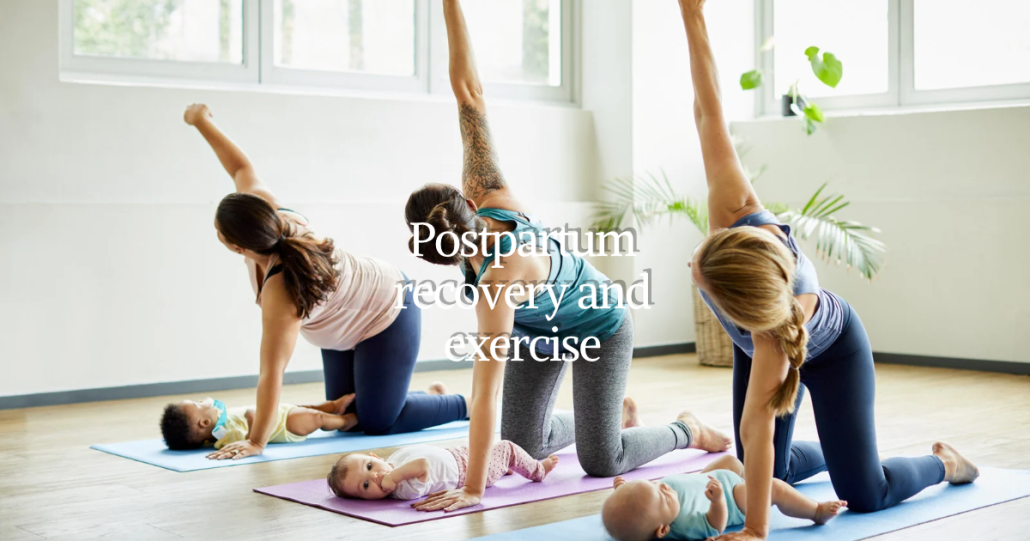
Postpartum recovery and exercise
Postpartum recovery and exercise
Every postpartum experience is unique.
The postpartum period involves significant physiological and psychological changes, increased physical demands, and major shifts in daily life. Recovery is therefore not a one-size-fits-all process.
There are no strict rules for postpartum recovery, but there are useful guidelines and general timelines that can help guide a safe and progressive return to physical activity. While much of the initial tissue healing takes place within approximately 12–16 weeks, some tissues may continue to remodel and regain strength and function for up to a year or longer.
The commonly referenced six-week postpartum recovery period can create an unrealistic expectation that the body should be “back to normal” by that point. This can place unnecessary pressure on women to “bounce back” and return quickly to their previous level of activity. Progressing too quickly, however, may contribute to persistent symptoms or dysfunction later on.
At the same time, the first six weeks should not be interpreted as a period of complete inactivity. Although rest and recovery are essential, complete rest is not realistic. Caring for a newborn can itself be physically demanding, and gentle, progressive movement may support both physical and psychological recovery.
When appropriate and cleared by a healthcare professional, gentle movement can be restorative and nourishing. It can help a woman gradually regain function of the pelvic floor and core, reduce aches and discomfort, support the healing process, and prepare her for a gradual return to exercise.
The American College of Obstetricians and Gynecologists (ACOG) recognizes that women who are medically cleared and feel ready may gradually resume physical activity, including light activity immediately – in the early postpartum period. The appropriate timing and intensity, however, should always be individualised.
The goal is therefore not simply to choose between “doing nothing for six weeks” and “returning to normal exercise after six weeks.” Recovery is on a continuum. The key is to find the appropriate timeline: respecting the healing process while introducing movement and exercise in a way that matches the individual woman’s symptoms, capacity, experience, and goals.
In the early postpartum weeks, a woman may be ready for gentle movement, but that does not mean she is ready to return to her previous workouts. Taking the healing process seriously and progressing gradually can provide a stronger foundation for a successful return to exercise.
Three Goals of Postpartum Training
There are three broad goals that can help guide postpartum training. These goals overlap and progress at different rates depending on the individual.
Goal 1: Rehabilitation and Recovery
Pregnancy and childbirth place substantial demands on the body. At the same time, a new mother may be caring for an infant, experiencing disrupted sleep, and adapting to significant changes in her daily routine.
During the early postpartum period, the priority should therefore be recovery. Establishing a strong foundation at this stage can help ensure that the client is physically and mentally prepared to progressively return to daily activities. The aim is not to rush the process, but to support healing while gradually introducing movement and function.
Goal 2: Improving Pelvic Floor and Core Function
The second goal is to restore the function and coordination of the pelvic floor and core.
This may include:
Improving mind-muscle awareness and connection of the abdominal muscles and pelvic floor
Learning to appropriately contract and relax the pelvic floor
Restoring abdominal wall tension and function following pregnancy
Rebuilding strength and coordination of the core and pelvic floor
Improving the ability to respond to changes in position, movement, and load
Patience is particularly important during this stage. Some women may initially find it difficult to feel or appropriately activate muscles that have undergone significant changes during pregnancy and childbirth.
Symptoms such as leaking, altered sensation, difficulty activating the abdominal muscles, or difficulty contracting and relaxing the pelvic floor may occur during recovery. These symptoms should be taken seriously and, when necessary, assessed by an appropriate healthcare professional or pelvic health specialist.
Ideally, pelvic floor and core awareness should also be developed before and during pregnancy. This includes learning to fully contract and fully relax the pelvic floor, consciously engage the core, and coordinate these muscles with everyday movements and changes in load or position.
The talk is not about strengthening through ‘ab workouts’ , but to restore their ability to coordinate appropriately integrating breathing, movement, and pressure with physical demands.
Goal 3: Improving Strength and Endurance
Motherhood can become physically demanding. Carrying a child, lifting and holding a baby, performing household tasks, spending more time on the floor, and repeatedly moving under load all require physical capacity.
Strength and endurance training can help women better manage these demands and reduce the physical burden of everyday activities.
Beyond the demands of motherhood, improving strength and cardiovascular fitness also provides broader health benefits and supports long-term physical capacity.
Postpartum Training Timeline
The following phases provide a general framework for progressing postpartum exercise more in detail. They should be viewed as guidelines rather than fixed deadlines. Recovery varies considerably between women, and progression should always be based on symptoms, function, individual circumstances, and medical considerations.
Phase 1: Rehabilitation and Recovery — 0–6 Weeks
Phase 1 generally covers the first six weeks following birth and represents the early postpartum period. However, recovery frequently extends beyond this timeframe, and six weeks should be viewed as a reference point rather than a deadline.
The primary focus during this phase is rest, recovery, rehabilitation, and gradually beginning to restore movement.
Gentle movement performed in a controlled environment can be physically and mentally restorative. It may help reduce aches and discomfort, support circulation and recovery, and begin restoring pelvic floor and core function.
Depending on the individual and her medical circumstances, this may include activities such as:
Gentle walking
Breathing exercises
Pelvic floor awareness and contractions
Gentle mobility work
Controlled dynamic movements that would typically form part of a warm-up
The purpose of this phase is not to improve performance. Instead, it is to establish a foundation for the next stage of recovery.
Phase 2: Return to Exercise — 7–18 Weeks
Phase 2 focuses on gradually transitioning from rehabilitation toward a more structured exercise program.
During this phase, the goal is to progressively develop core strength, functional movement capacity, general strength, and aerobic fitness while continuing to monitor how the body responds to increased demands.
The beginning of this phase should generally involve lower loads, lower complexity, and low-to-moderate training volume. For example, strength training may initially consist of approximately 2–3 sets per exercise, while cardiovascular training can begin with walking or lower-intensity aerobic work.
Pelvic floor training can also gradually increase in volume through additional sets and repetitions, provided the woman is responding well and remains symptom-free.
As capacity improves, the program can progressively become more challenging. From approximately week 13 onward, and depending on the individual’s recovery, it may be appropriate to gradually increase load, volume, and movement complexity.
For example, a client may progress from a goblet squat toward a barbell squat, or from lower-intensity walking toward moderate- or higher-intensity cardiovascular training.
These progressions should not be based on the calendar alone. The woman’s symptoms, movement quality, strength, recovery, and overall readiness should determine whether she is ready to progress.
Phase 3: Heavier training and prep for return to favourite activity — 19–42 Weeks
During Phase 3, assuming recovery is progressing well and there are no significant complications or symptoms, training can become increasingly focused on rebuilding higher levels of strength, endurance, and performance.
For women who have established a strong foundation and remain asymptomatic, this may include a gradual return to higher-load or higher-impact activities such as running, jumping, or skipping.
The pelvic floor and core remain important throughout this phase, but the primary focus can increasingly shift toward rebuilding overall strength, aerobic capacity, and the specific physical qualities required for the woman’s goals.
Depending on her experience, goals, recovery, and available time, a training schedule could eventually include approximately 2–4 strength sessions per week, 1–2 moderate-intensity cardiovascular sessions, and potentially 1–2 higher-intensity or HIIT sessions.
However, this is not a prescription that every postpartum woman needs to follow. Training frequency and intensity should be adapted to the individual.
The Individual Approach
Although these phases provide useful reference points, postpartum recovery does not follow a perfectly linear timeline.
Some women will progress more quickly, while others will require considerably more time in a particular phase. Factors such as the type of birth, complications, symptoms, previous fitness level, sleep, stress, breastfeeding, training history, and individual recovery can all influence how a woman responds to exercise.
The timeline should therefore be used as a framework rather than a set of rules.
The ultimate goal of postpartum training is not simply to return a woman to her pre-pregnancy workouts as quickly as possible. It is to help her rebuild capacity progressively, restore confidence in her body, manage the physical demands of motherhood, and ultimately return to the activities she enjoys in a way that is sustainable and appropriate for her individual recovery.